“If we are not willing to commit blood to the cause, we
should take an appetite suppressant for our drone use.” This quote, by West Point
professor Ike Wilson, generally sums up the panel’s feeling on drone warfare
during the Conference on World Affairs talk: “Droning On and On: New
Conventional Warfare.”
Professor Wilson brought up three points to explain why he
has an issue with drone strikes. They
are as follows:
1.
Legality.
Mr. Wilson took issue with the legality of drone strikes from a due
process standpoint, (both domestically and internationally), as well as a
violation of sovereign airspace.
2.
Military sales.
Because of the cheap cost of drones, ease of purchase, and high return
on investment, the US will eventually be surpassed in drone technology. This means that adversarial states will have
the ability to potentially use drones against the United States
3.
War theory dimension. Drones further blur the line between
combatant and noncombatant, executive vs. legislative control, and belligerent
vs. non belligerent acts of war. The
president is able to authorize the use of drones by executive order, giving him
emense power to carry out drone strikes without the public being aware. Often times, these drone strikes are
targeting “militants” who actually just may be ordinary citizens.
Most importantly for Professor Wilson, drones dehumanize
warfare, leading to an “easy war” solution.
If we aren’t willing to send soldiers a country for war, is the cause
really worth it? According to Wilson, “War
should never be easy, especially for democracies.”
Dr. John Tirman, a professor at MIT, took similar issues
with drones. Mr. Tirman spoke on
defense, pointing out the idea that with the introduction of any military weapon,
adversaries eventually gain the same capability.
This is the case with chemical weapons, missiles, and, of course,
nuclear weapons. It is simply a matter
of time until the US sees adversarial threats for drone use against the
America.
Though Dr. Tirman described himself as a “general supporter”
of President Obama, the use of drones is an impeachable offense, according to
him. Drone use, he says, is not out of
bounds itself, but the denial of use, collateral damage, violation of
sovereignty, and conduction of wars in places where war has not been declared
is down right illegal.
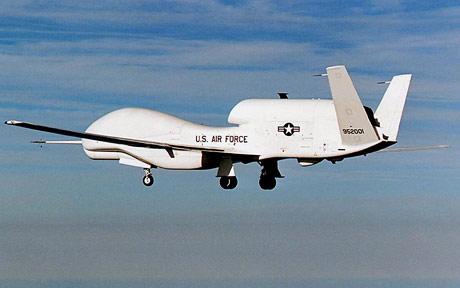
What’s more, is the high rate of suicide among drone
operators. One reason for this, Mr. Tirman hypothesized, is that a drone
operator does not see the same culture of support from his or her unit, as they
might during a boots on the ground operation.
The environments, without a doubt, are psychologically different.
Other speakers discussed major problems with civilian
casualties as a result of drone use. Not
only are civilians accidently labeled “enemy militants” and killed by drone
strikes, they are also killed when they act as first responders to a drone
strike—running to the scene of an initial drone strike in order to help, only
to be injured or killed by a second drone strike. And do these civilians receive any
compensation for an injury or death of a loved one? Often times not.
This panel raised some very real and concerning issues with
the use of drones. In fact, it has made
me rethink my stance on drones. I
particularly take issue with the lack of transparency regarding President
Obama’s authorization of drone strikes.
The unauthorized use of drones demonstrates not only a major
transparency issue within our government, but allows our executive to carry out
wars without public knowledge. This I
have a major problem with.
Though I am not discourage drone use completely, I absolutely
do believe that drone strikes, and the executive decision-making behind the
strikes, must come under control.

No comments:
Post a Comment